
HARD LABOR AT THE CONSTITUTIONAL COURT
Patrick Grene and Pan Mohamad Faiz
* This article was published in The Jakarta Post – Tuesday, August 27, 2019
 After the dispute over the presidential election was settled, many assumed that the duties of the Constitutional Court were at an end. Nothing could be further from the truth. From the conclusion of that trial until Friday, August 9, the Court was working harder than ever in the vastly complex legislative election disputes.
These elections determined almost the entire legislature. In addition to voting for the President and Vice President on April 17, Indonesians also voted for representatives for the DPD, the Regional Representative Council and the DPR, or People’s Representative Council. They also elected members of the DPRD, the provincial, regency, and municipal councils. Hundreds of thousands of candidates competed for over twenty thousand seats.
 Abstract: Indonesia implements dualism of judicial review system because there are two different judicial institutions that are granted the authority to review laws and regulations, namely the Constitutional Court and the Supreme Court. This research aims to analyse the problems caused by the dualism of judicial review system. It found two main legal problems of the current system. First, there is an inconsistency of decisions concerning judicial review cases for the same legal issues decided by the Constitutional Court and the Supreme Court. Second, there is no mechanism to review the constitutionality of People’s Consultative Assembly (MPR) decisions and regulations under the level of law. Based on these findings, this research suggests that the authority to review all laws and regulations should be integrated under the jurisdiction of the Constitutional Court.
 Abstract: One of important mechanisms considered effective to protect civil and political rights of the citizens in Indonesia is constitutional review. This mechanism was created after the constitutional reform by establishing the new Constitutional Court in 2003 as an independent and separate court from the Supreme Court. This article examines the development of human rights guaranteed in the Indonesian Constitution. It also provides a critical analysis of the Constitutional Court’s role in protecting civil and political rights in Indonesia through its landmark decisions on five categories, namely: (1) freedom of assembly and association; (2) freedom of opinion, speech and expression; (3) freedom of religion; (4) right to life; and (5) due process of law. This research was conducted based on qualitative research methodology. It used a non-doctrinal approach by researching the socio-political impacts of the Constitutional Court’s decisions. Although there are still inconsistencies in its decisions, the research concludes that the Constitutional Court has taken a step forward for a better protection of civil and political rights in Indonesia that never existed prior to the reform.
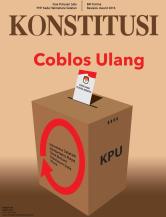 Kekosongan posisi Hakim Agung Amerika Serikat pasca meninggalnya Hakim Antonin Scalia pada 13 Februari 2016 lalu menjadi isu nasional di negeri Paman Sam. Penyebabnya, Mahkamah Agung Amerika Serikat dianggap memiliki posisi dan kewenangan strategis dalam memutuskan kasus-kasus penting dan fundamental, sehingga Presiden dan Senate saling tarik-menarik dalam proses pemilihan Hakim Agung penggantinya.
 Pan Mohamad Faiz, S.H., M.C.L., Ph.D.